

Overview

Bringing touch to every robot lab


FlexiTac is a scalable, flexible tactile sensor designed to make touch sensing accessible for robotics. It integrates easily into diverse platforms and manipulation tasks. Our goal is to make tactile sensing simpler to build, easier to customize, and more practical to deploy.

FlexiTac is a flexible tactile sensing solution designed to make tactile sensing accessible to the robotics community. Built with scalability and adaptability in mind, FlexiTac can be integrated into a wide range of robotic platforms and manipulation tasks.

Customization App · FlexiTac-Gen

Design a FlexiTac sensor for your own robot

Now live
  1. 1Select your gripper
  2. 2Find best resolution
  3. 3Click to generate
  4. 4Send to manufacture
FlexiTac-Gen · 13 generated sensor designs, from fingertips to humanoids

FlexiTac-Gen is live. Pick your gripper, generate the sensor, and get files ready to manufacture. Questions? Join our Discord.

Open FlexiTac-Gen

Summary Video

A short walkthrough of the tactile hardware fabrication and representative robotics applications.

Hardware

Hardware Overview

Two sensor generations with different fabrication trade-offs, plus open-source resources for reproduction and deployment.

Featured Hardware

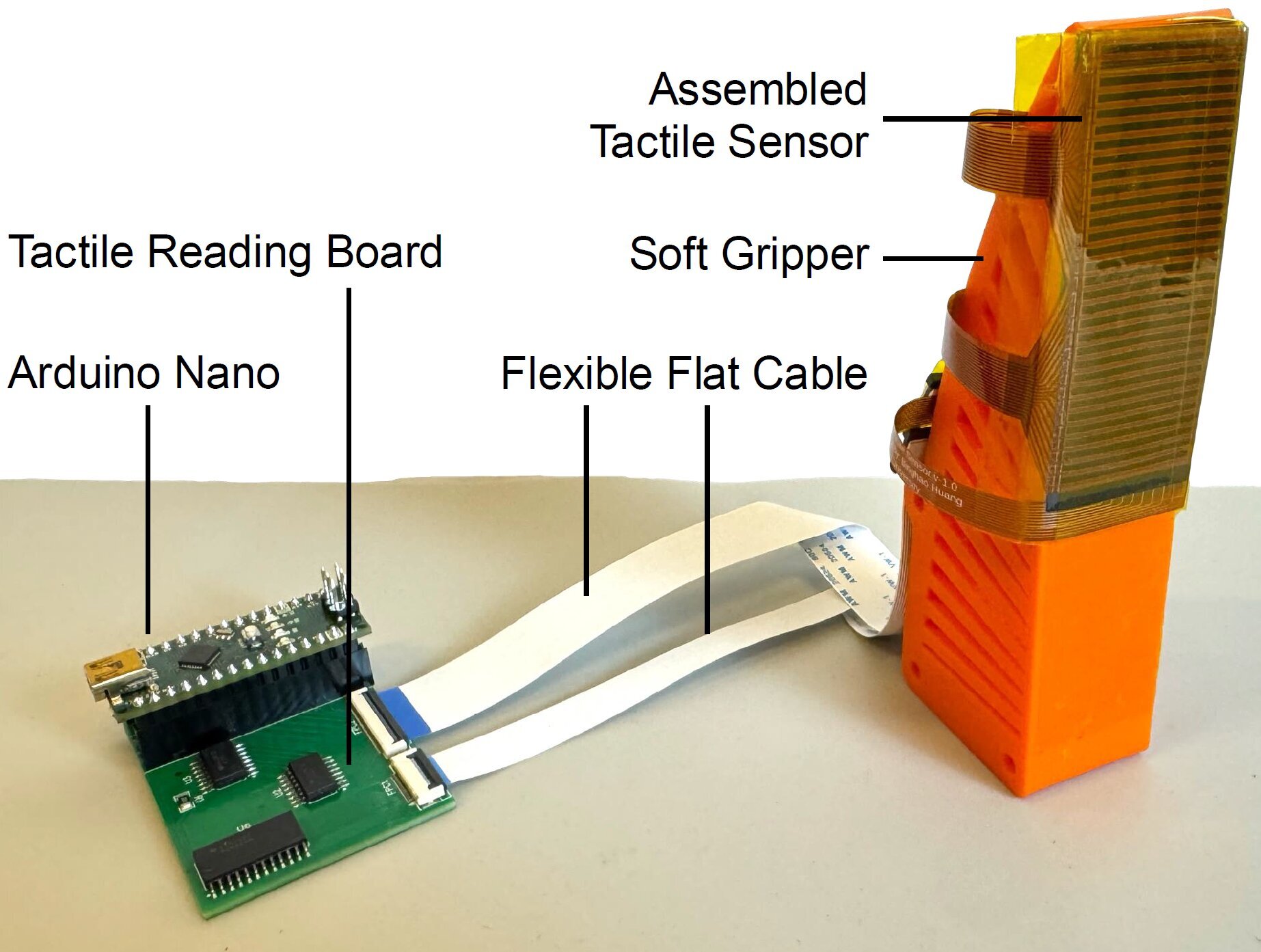
FlexiTac-V2

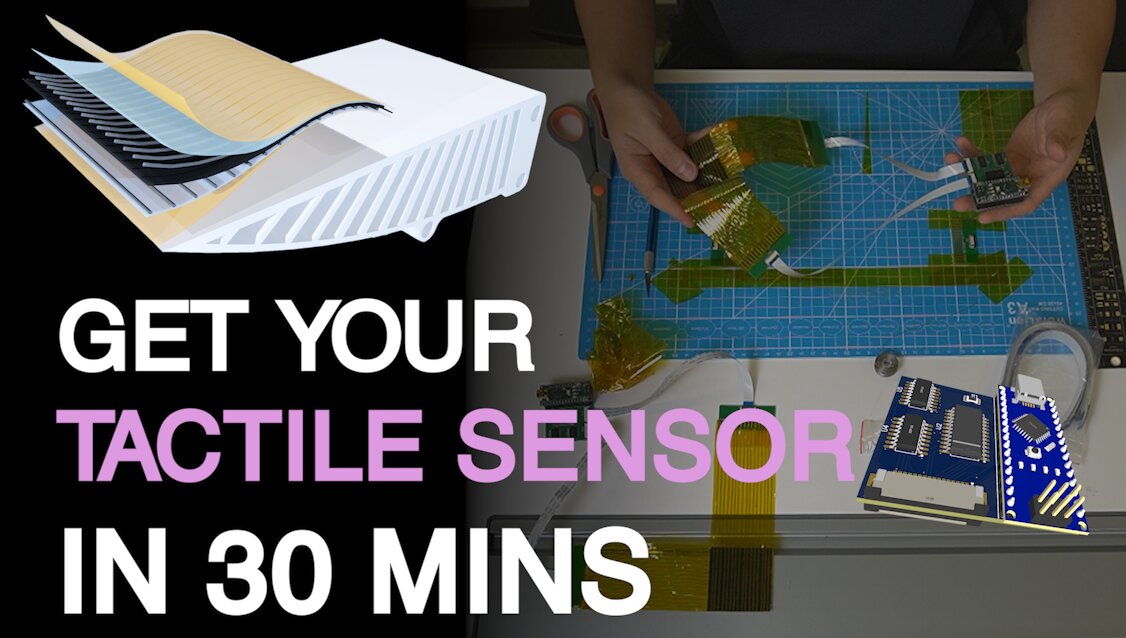
Fabrication time: ~3 mins

FPC-based · 2 mm grid · 32×12 resolution · $2.5 per sensor piece

FlexiTac-V2 Hardware

FlexiTac sensor

Hardware Tutorial Preview

Teleoperation Demo 1
Force Feedback with FlexiTac

Teleoperation Demo 2
Cable Routing with FlexiTac

Legacy Hardware

FlexiTac-V1

Fabrication time: ~30 mins

3 mm grid · 16×16 resolution · $5 per sensor piece

Featured in 3D-ViTac (CoRL 2024) for fine-grained visuo-tactile manipulation.


Simulation

Tactile Simulation

Penalty-based tactile simulation for different simulation platforms.

Tactile Simulation in Isaac Sim

A tactile simulation in Isaac Sim and Web-based interaction demo for data collection.

Isaac Sim Tactile Simulation Demo

Web-Based Data Collection

Real-Sim-Real Tactile Pipeline

Featured in VT-Refine (CoRL 2025) for bimanual assembly via visuo-tactile simulation fine-tuning.

Simulation Example 1

Simulation Example 2

System Designs

System Design Examples

Representative examples showing how FlexiTac can be integrated into different robotic platforms.

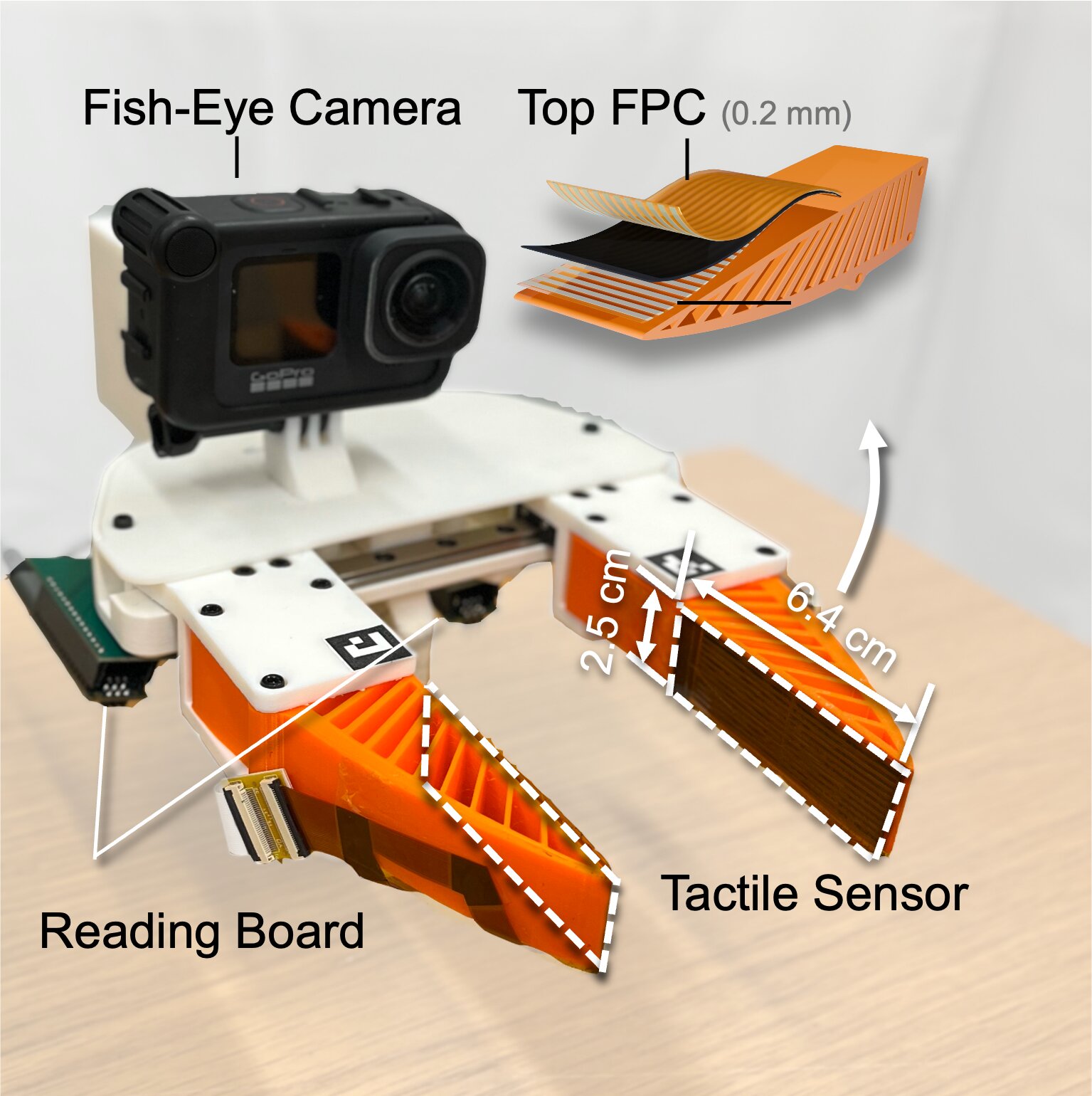
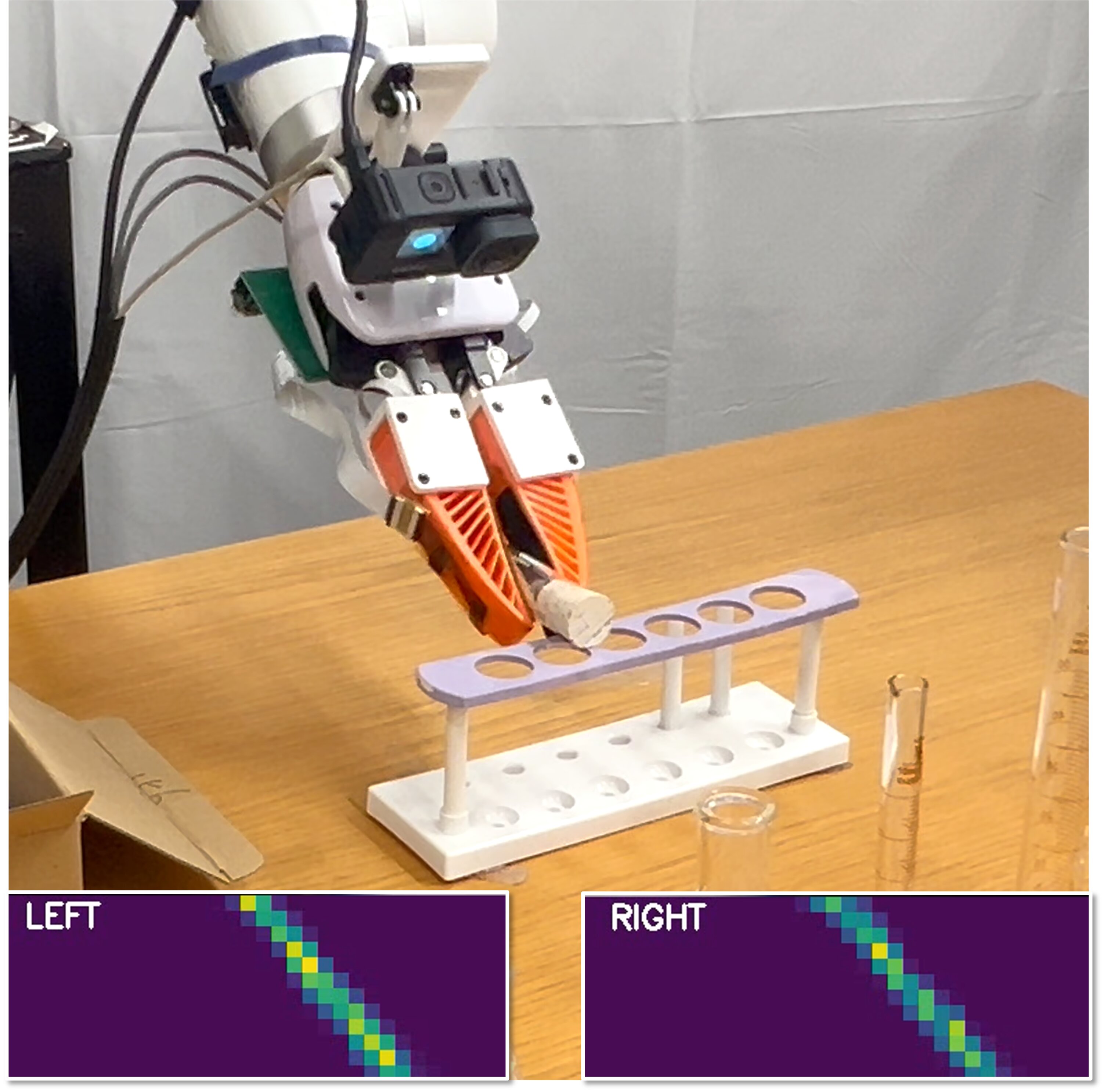
Portable Visuo-Tactile Gripper

Featured in Touch in the Wild (NeurIPS 2025) for large scale data collection in the wild.

Portable Visuo-Tactile Gripper

Portable Visuo-Tactile Gripper

xArm Integration

xArm Integration

Other Robotic Integrations

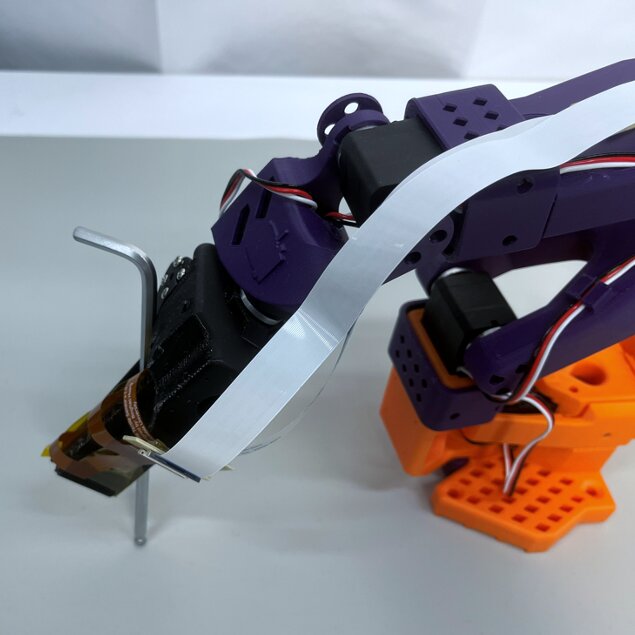
LeRobot

LeRobot Integration

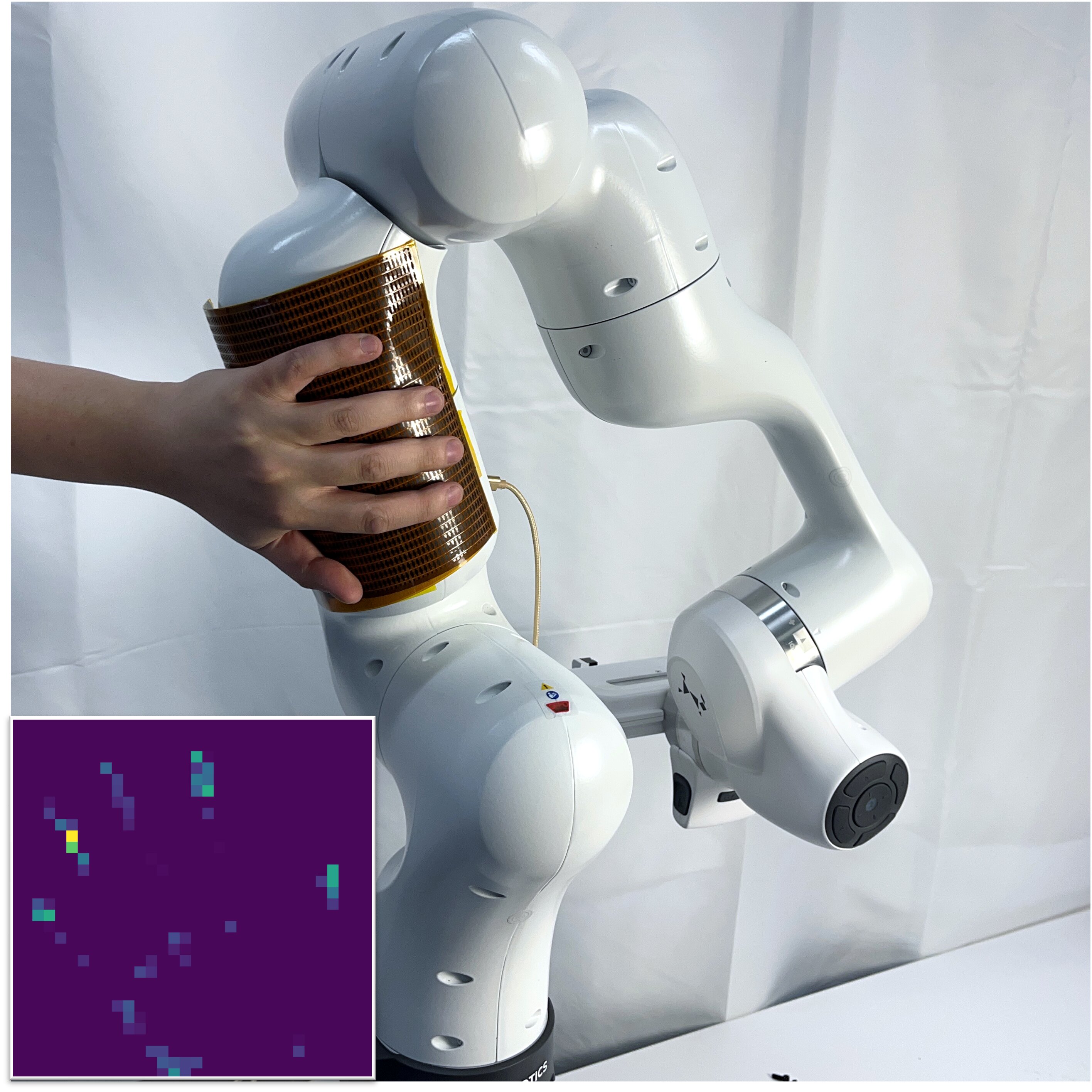
Franka + Skin

Franka with Tactile Skin

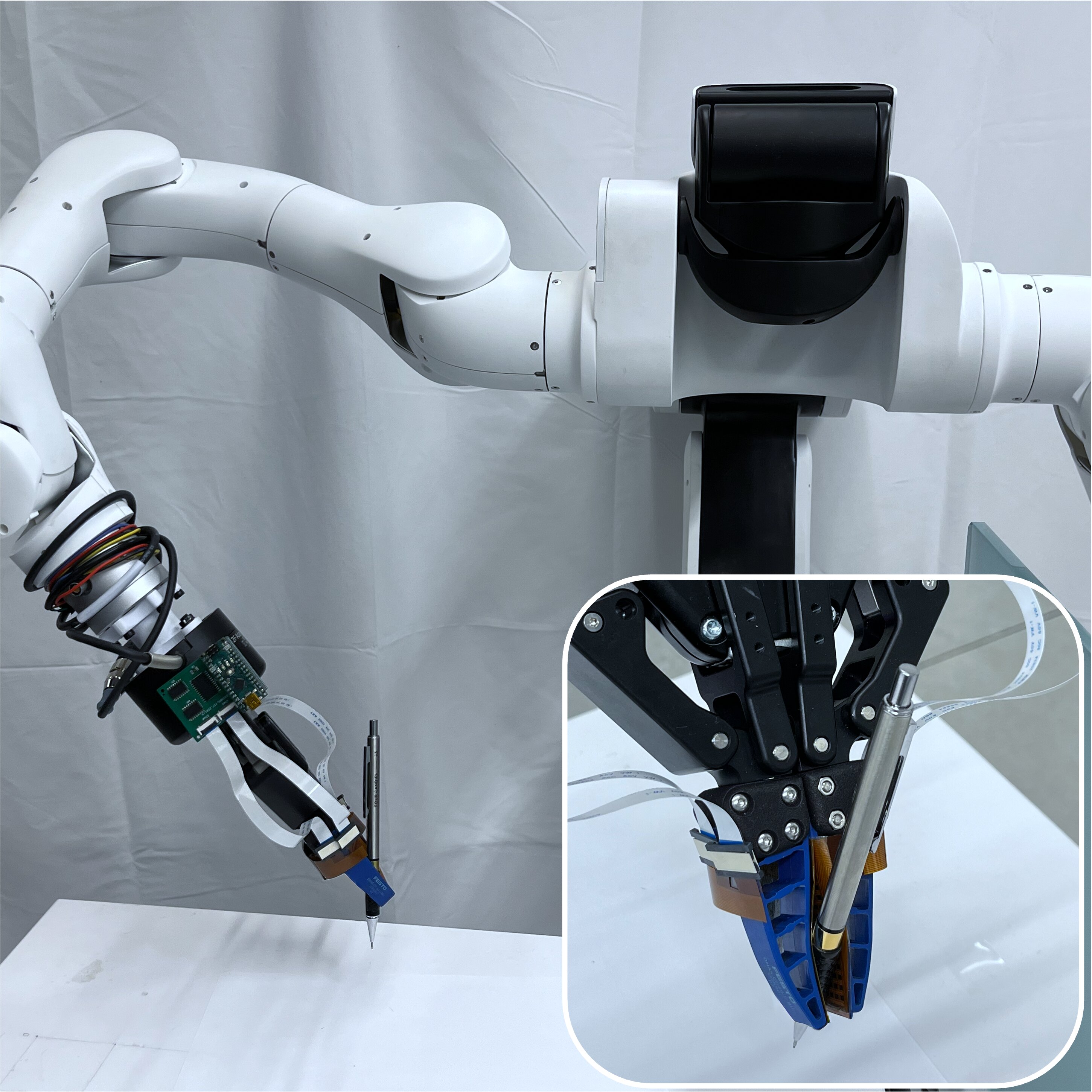
Robotiq

Robotiq Gripper Integration

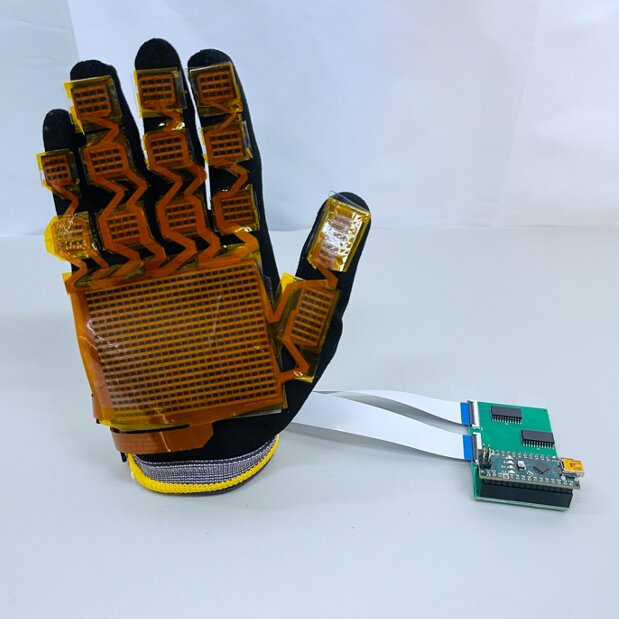
Tactile Glove

Tactile Glove

BibTeX

@article{huang2026flexitac,
  title={FlexiTac: A Low-Cost, Open-Source, Scalable Tactile Sensing Solution for Robotic Systems},
  author={Huang, Binghao and Li, Yunzhu},
  journal={arXiv preprint arXiv:2604.28156},
  year={2026}
}
Timeline

From One Sensor To An Ecosystem

Each project tested one open question about low-cost tactile arrays, and each answer became part of an open platform.

Papers and releases are dated by first public appearance; conferences by when they meet.

  1. 2023–24

    The question · First proof

    1. Work on 3D-ViTac begins

      Can a low-cost, flexible piezoresistive array make robot manipulation better?

    2. 3D-ViTac teaser: two robot hands with tactile pads turning touch into 3D tactile points

      3D-ViTac

      Low-cost touch improves fine-grained manipulation.

      CoRL 2024
  2. 2025

    Scaling up tactile data

    1. FlexiTac V2

      Flexible PCB replaces yarn: more robust, higher resolution.

    2. VT-Refine

      Real-to-sim-to-real: scale tactile data in simulation.

      CoRL 2025
  3. 2026

    An open source ecosystem

    1. LeFlexiTac

      Touch for LeRobot: a drop-in tactile path.

    2. ICRA 2026

      • ViTaS setup: a Galaxea arm and gripper with a 3D-ViTac tactile sensor, and tactile maps with and without contact
        ViTaS

        Soft-fusion contrastive learning of vision and touch.

      2 works · Vienna

    3. IROS 2026

      • VTAP Gripper

        FlexiTac fingertips plus a visuo-tactile palm.

      • TacVLA

        Contact-aware tactile tokens for VLA policies.

      3 works · Pittsburgh

    4. CoRL 2026

      • FlexiTac

        The open-source platform itself.

        Demo Track
      • TacCoRL

        Touch in VLA via sim-real co-training.

      • WT-UMI

        Whole-body tactile interface for humanoids.

      • DexFLEX

        Contact-aware control for dexterous hands.

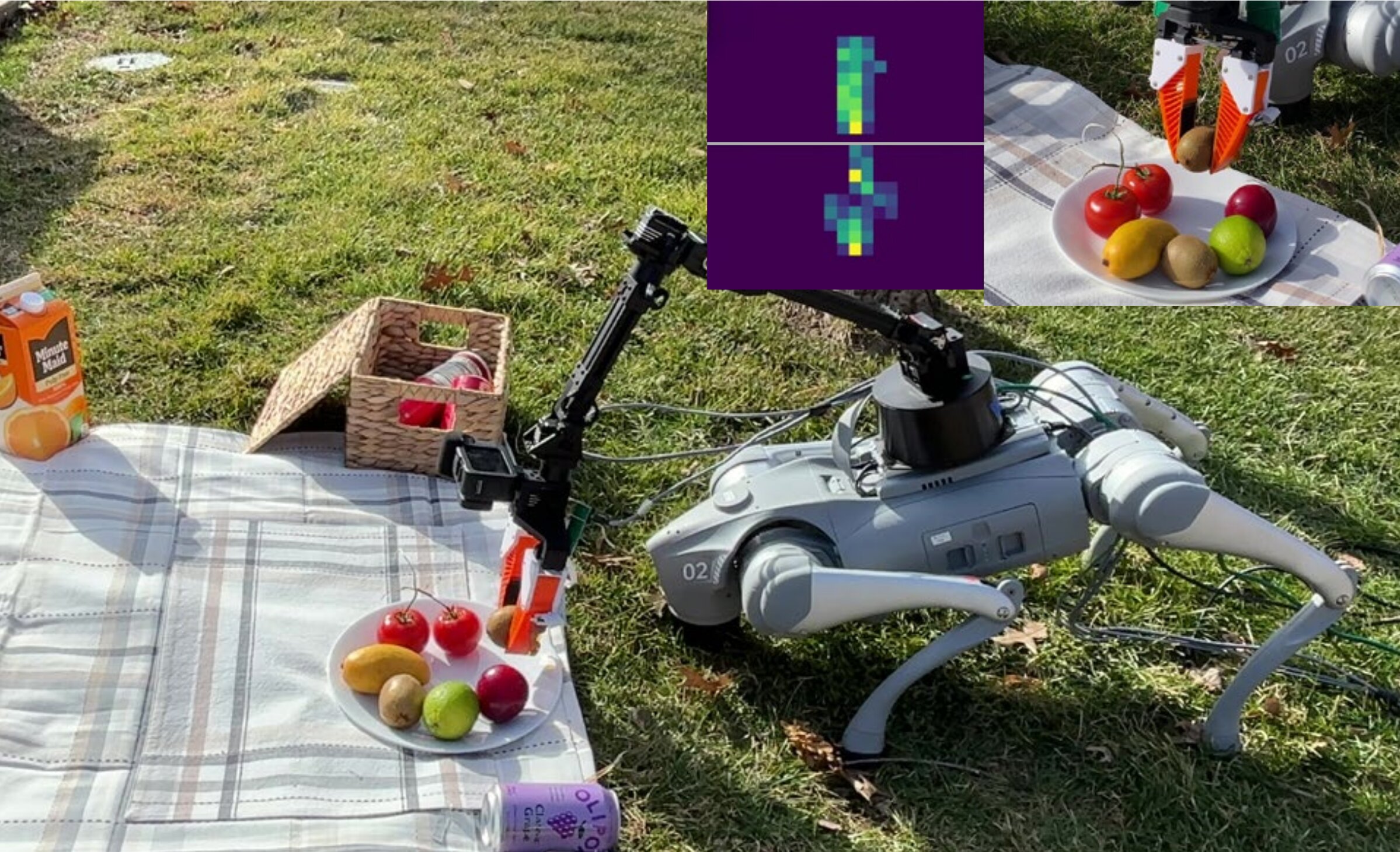
      • Unitree Go2 quadruped with an arm and a tactile gripper, with its tactile readings
        TAC-LOCO

        Tactile whole-body RL for a quadruped.

      • ViTaForce data collection with a force/torque sensor, wrist camera and FlexiTac, and peg-in-hole tasks with tactile and force readings
        ViTaForce

        Vision–touch–force pretraining for assembly.

      • TactX

        One tactile representation across sensors.

      7 works · Austin

Community

FlexiTac Community

We are excited to see FlexiTac reach labs, students, and researchers around the world.

FlexiTac worldwide reach
Pageviews (last 30 days) Loading...
Institutions using or exploring FlexiTac

Thank you for visiting and supporting open-source tactile sensing.

Q & A

Frequently Asked Questions


How long does it take to ship PCB or FPC pieces?

Once you place an order, it typically takes around 1–2 weeks for the PCB or FPC pieces to be fabricated and shipped, depending on your location and the shipping method.

How robust is the sensor to wear and tear?

In our experience, the sensor shows good consistency over time and can often be used for around a year without significant degradation. Some teams have collected thousands of demonstrations without breaking the sensor.

What if some sensor pieces are damaged or malfunctioning?

We usually recommend ordering a few extra sensor pieces as backups. In our practice, replacing a damaged sensor with a new one typically does not noticeably affect performance, suggesting good consistency across different sensor instances.